
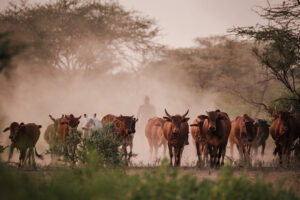
SORALO is delighted that the United Nations has declared 2026 as the International Year of Rangelands and Pastoralists (IYRP). Rangelands cover at least 47% of the world’s terrestrial surface are home to one-third of the global population, many of whom depend directly on them to meet direct needs of food, shelter, and water. Some of these people are the 200-500 million pastoralists worldwide who support communities by producing food where no crops grow and are essential to conserving rangelands and biodiversity through their land management knowledge and techniques.
In the South Rift, rangelands make up the core of our landscape: they feed livestock and wildlife, are home to our communities, and support, and are supported by, Maasai pastoralist culture. To better understand this important element of our environment, SORALO has commissioned an upcoming report that will use the most recent data available to examine the changes, threats and opportunities facing our rangelands, as well as other elements of the landscape, including water, forests, wildlife and the people and culture who steward them.
But first, we must ask: what do healthy rangelands look like?
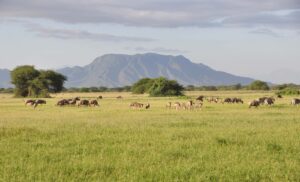
- Productive vegetation: Healthy rangelands are characterised by intact soils, diverse and productive vegetation, and the ability to recover from droughts and grazing pressure. Native plants also outcompete invasive species.
- Open and connected: They typically remain open and connected, allowing the movement of livestock and wildlife across the landscape, and they sustain perennial grasses, shrubs, and trees that anchor the soil and provide forage year-round.
- Rainfall: They receive predictable and sufficient rainfall, and water infiltrates the soil rather than running off.
However, in parts of the South Rift these conditions are facing evolving pressures.
The upcoming ‘State of Conservation’ report, put together by Sustain East Africa, has identified a number of trends and threats affecting the rangelands across the South Rift landscape:
- Productive vegetation: Long-term analysis (1985-2015) shows that over half of the region experienced declining vegetation productivity, with more severe vegetation losses during the dry season and less vegetation recovery during the wet season. In some areas, vegetation increases have been recorded, however this is not coming from healthier or more productive grassland, but instead from bush encroachment.
© Greg Armfield WWF-UK
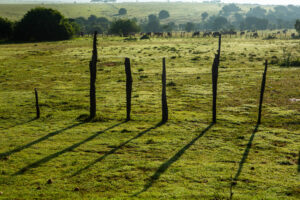
2. Open and connected: The subdivision and sale of land is leading to land use change and fencing, threatening communal land management, landscape connectivity and the mobility of livestock and wildlife across the landscape. While mobility levels do remain high in the central parts of the South Rift, there are lower levels of mobility in heavily fenced or urbanised areas such as areas closer to Nairobi and central Kajiado In these areas, although individual animals can still move through parts of the landscape, large herds cannot. This could lead to the collapse of these populations as they are unable to access food, water or other resources, and could have knock on effects on landscape health and productivity.
3. Rainfall: Despite climate change, there have been no significant changes in average annual rainfall. However, rainfall is changing more often and becoming more unpredictable, which makes it harder for communities to plan ahead and adapt and can degrade biodiversity.
Amongst these trends and challenges, there are also some encouraging opportunities. First, while the impact of fencing has fragmented the ecosystem and reduced mobility, land conversion is limited and much of the landscape in the South Rift has not lost its natural habitat. Indeed, 94.5% of the landscape remains open and ecologically intact. Therefore, connectivity between natural habitats can be restored. Second, there is evidence that the seasonal movement of livestock under strong grazing management plans can maintain significant dry-season grazing reserves, supporting a diverse and resilient wildlife population.
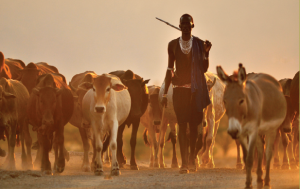
Finally, pastoralist livestock production remains, and will most probably continue to be, the most dominant and most viable land use in the region. For pastoral livelihoods to thrive – and deliver value to landowners – land, pasture and water must be managed well. In this context, conservation of rangelands in the South Rift is inherently aligned with the economic and livelihood interests of local communities and landowners, who are also the stakeholders best positioned to seek out, identify and implement solutions.


